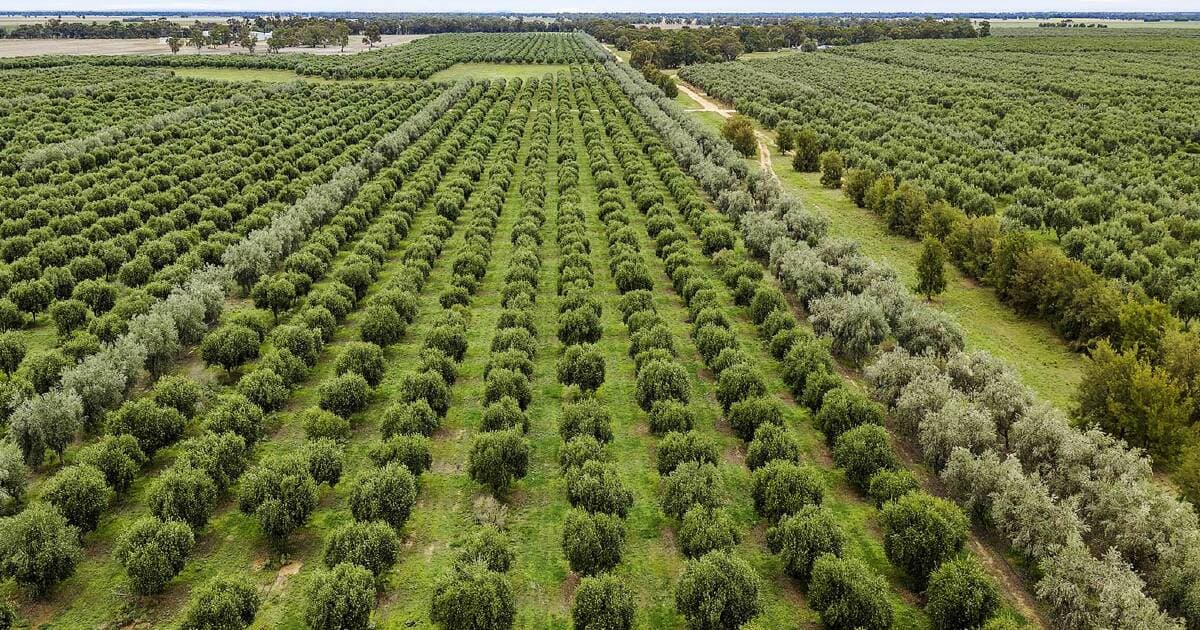
An olive estate is a productive agricultural asset whose performance depends on more than the number of trees or the area of land. Grove maturity, growing conditions, cultivation practices, harvest decisions and the commercial route to market all influence its operating results.
Grove maturity and productive capacity
The age and condition of olive trees can influence their productive capacity, but tree age alone does not determine output. Variety, planting density, pruning, soil conditions, water availability and ongoing management also matter.
Production can vary from one season to the next. Some groves experience alternating periods of higher and lower yields, making it important to assess performance across multiple harvests rather than relying on a single season.
When evaluating an estate, historical production records should be considered alongside the condition of the trees, infrastructure and cultivation practices.
Irrigation and water management
Water availability is an important consideration in olive cultivation. The relevance and extent of irrigation depend on local rainfall, soil characteristics, climate, grove design and production objectives.
Water-management practices can influence tree health, operating costs and resilience during dry periods. However, irrigation systems require suitable infrastructure, maintenance and access to water, and their effectiveness depends on local conditions.
A review of an estate should consider its water sources, irrigation arrangements, infrastructure condition and exposure to water restrictions or drought.
Harvest cycles and operating costs
Olives may be harvested using manual methods, mechanical equipment or a combination of approaches. The appropriate method depends on grove layout, terrain, tree characteristics, labour availability and the intended product.
Harvest timing can affect fruit condition and the characteristics of the resulting oil. Harvest logistics, transport and processing arrangements can also influence costs and product quality.
Labour, equipment maintenance, fuel, processing and other operating expenses should be considered when assessing an estate's operating performance.
From production to commercial value
An olive estate's commercial results depend on how its output is marketed and sold. Relevant factors may include the volume harvested, oil yield, product quality, processing costs, customer demand and achieved sale prices.
An estate producing a large crop does not necessarily generate stronger financial results if costs are high or selling prices are weak. Revenue and profitability should therefore be assessed separately from physical production.
Reporting estate performance
Investor reporting can provide useful context through harvest records, production volumes, water-use information, operating costs and progress against the estate's management plan.
Reported figures should identify the period covered, their source and whether they represent actual results, estimates or projections. Comparisons between seasons should account for differences in weather, production conditions and reporting methods.
Key takeaways
Published for general educational purposes. Information may change over time and should be considered alongside the relevant investment documentation and risk disclosures.